A Poet Who Destroyed Art And Split His Family, Ross Douthat?
I’m another page into Ross Douthat’s book Believe: Why Everyone Should Be Religious, and so here’s another episode of the podcast Not Everyone Believes, Ross Douthat.
After Ross Douthat’s acknowledgements, he moves on to a poem written by the Catholic priest Gerard Manley Hopkins in the year 1877. The poem reads:
The world is charged with the grandeur of God.
It will flame out, like shining from shook foil;
It gathers to a greatness, like the ooze of oil
Crushed. Why do men then now not reck his rod?
Generations have trod, have trod, have trod;
And all is seared with trade; bleared, smeared with toil;
And wears man's smudge and shares man's smell: the soil
Is bare now, nor can foot feel, being shod.
And for all this, nature is never spent;
There lives the dearest freshness deep down things;
And though the last lights off the black West went
Oh, morning, at the brown brink eastward, springs —
Because the Holy Ghost over the bent
World broods with warm breast and with ah! bright wings.
Hm. What work is this poem doing in Ross Douthat’s book?
It’s not a persuasive poem. It doesn’t contain even one line of rational argument. It’s nothing more than religious praise that rhymes. It essentially says that there is a god, and the greatness of it is in the world, and that the morning comes because a sacred spirit makes it happen.
Taken literally, the poem is nonsense. Of course, it’s dense to presume that a poem should be read literally.
What does this poem from Gerard Manley Hopkins represent, then, metaphorically?
Hm. The symbolism of the poem is stretched thin.
The poem says the grandeur of a god will flame out, like shining from shook foil? If there’s a metaphor in that, it isn’t clear, or handy. Since when does flame shine out from shook foil? Foil glimmers if you shake it, but not with flame, and what does any god have to do with that?
What about the next line? How does crushed oil gather to greatness, and what does that have to do with the grandeur of any god? On a basic matter, is crushed oil actually a thing? Oil can be crushed out of seeds, I guess. Is Gerard Manley Hopkins saying that the grandeur of his god becomes great when something like seeds are crushed? What’s supposed to be crushed here, to get the oil? The world? The god? Olives?
In the next part of the poem, Gerard Manley Hopkins seems irritated by the knowledge that some people don’t share his religion, but he fails to meaningfully grapple with why this might be, or why it should not be. He just babbles strangely about people walking and working for a long time, and says something about people being smelly and wearing shoes. How is any of that relevant? Is the poet for or against shoes, metaphorically, and what does that have to do with people choosing not to follow his religion?
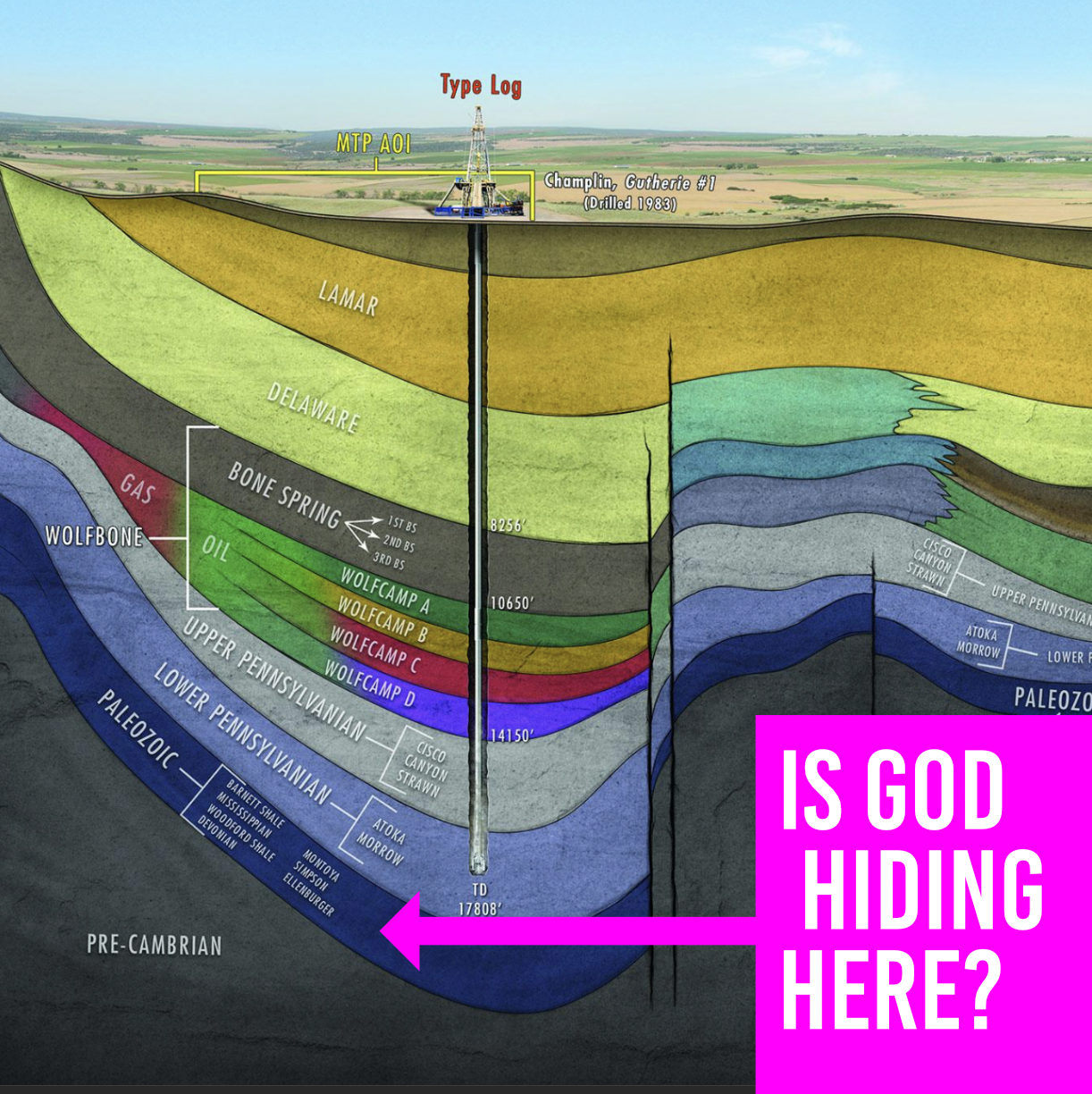
Next, Hopkins seems to be saying that, even though people work and wear shoes, there are fresh things deep down in nature. Hm. Is the poem criticizing industrialization, and celebrating fresh water in deep aquifers? Is that supposed to be like the “grandeur of god”? If so, it’s more than a bit weird, because grandeur is something that exists only when it is experienced, or when it is involved with people in some way. Grandeur is all about having an audience. Grandeur that is hidden deep underground isn’t grandeur. These lines provoke the question: What is the poet’s god doing hiding away, totally uninvolved in the world, if he’s so grand? Such evasive behavior is odd, especially for a god whose grandeur is supposedly charging the world. Deep groundwater doesn’t charge anything. It just hangs out in darkness, doing nothing much.
Besides, the poem now has a mixed metaphor for the god it tries to describe. Is the poet’s god like an underground aquifer, or like an electric charge? Choose one metaphor, and work with that, please!
Oh, hold on a minute. In the first part of the poem, the poet writes about the greatness of his god being like an electric charge within foil that produces a flame. Water isn’t the only thing that pools down in the depths of the earth. Petroleum exists there too and it can be lit on fire.
What are we supposed to make of that, then? Is the poet’s Christian god supposed to be like petroleum, a fossil fuel? That’s hardly something “fresh” as the poet describes it. It’s the slime of long dead things. That’s a really disgusting kind of thing for a god to be. Even back in the 1800s, when this poem was written, people knew very well that burning fossil fuels created toxic air pollution. Saying that your god is like crude oil is hardly a great sales pitch.
The poem concludes by saying that the Christian Holy Ghost makes the morning light come. What does that have to do with the rest of the poem? What does that have to do with foil or oil? It feels like the poet had some space to fill, and wanted to say something vaguely religious. There’s no sense of conceptual linkage from start to finish.
The poem rhymes, and that’s nice, I guess, if you’re into that sort of thing. Foil rhymes with toil and oil and soil. Okay, but to what purpose?
If I were the creative writing teacher of Gerard Manley Hopkins, I would write “needs work” in the margins of this poem, in red ink. It fails to come together, either logically or lyrically. It’s a mess.
The question that’s relevant to this podcast is this: Why has Ross Douthat chosen this clunky poem to begin his book?
I’m going to give a peek ahead to draw a connection that makes a little bit of sense. The first chapter of Believe: Why Everyone Should Be Religious centers around the assertion that the Christian god can be discovered through a rational examination of the world.
The poem by Gerard Manley Hopkins sort of suggests that the Christian god is somehow immersed in the world, to the extent that the world is charged with the god’s grandeur, like a piece of metal foil might be electrically charged. My sense is that Ross Douthat was excited by the first line of this poem, because it vaguely matched the foundational idea Douthat had for his book.
It is ominous, however, for Ross Douthat to choose a poem that begins with the same idea as his, only to fall apart into an incoherent shamble. Will Ross Douthat’s own writing going to take on a similar sloppy tone?
There is one other connection Ross Douthat has with Gerard Manley Hopkins: Both Hopkins and Douthat abandoned protestant Christianity that they were raised with in order to become hard line Catholics.
The Poetry Foundation explains, “Hopkins became estranged from his Protestant family when he converted to Roman Catholicism. Upon deciding to become a priest, he burned all of his poems and did not write again for many years.”
In our own time, the Christian Nationalism of Donald Trump, Pete Hegseth, and Ross Douthat has been as divisive as religion was in the Hopkins household. Present day Christianity also shares the censorious nature of Hopkins’s fervor. Hopkins burned his own papers for being insufficiently Christian, but present day Christian Nationalists take it even further, censoring others’ words and works when they fail to fall in line with the federal government’s fascist version of faith.
At least Hopkins had the decency only to shut himself down, for a while. Upon deciding to join the Roman Catholic Jesuits, Hopkins announced that he would “write no more… unless it were by the wish if my superiors.”
In fact, the Jesuit superiors of Hopkins never told him that they wanted to write any poetry. Hopkins began writing poetry again because he wanted to do it. So, while Hopkins claimed to have submitted to the authority of a Christian order, he really was just satisfying his own desires, while using the name of his god to make it seem as if he was being consistent.
Will the rest of Believe: Why Everyone Should Be Religious take on that self-serving tone? I suppose I’ll find out as I keep reading.
In the meantime, I’ll end this episode with the thought that a man who agrees to silence his own thoughts in the service of obedience to Christian authorities is not the greatest person to cite in a book in which you are trying to convince people that Christianity is purely rational.